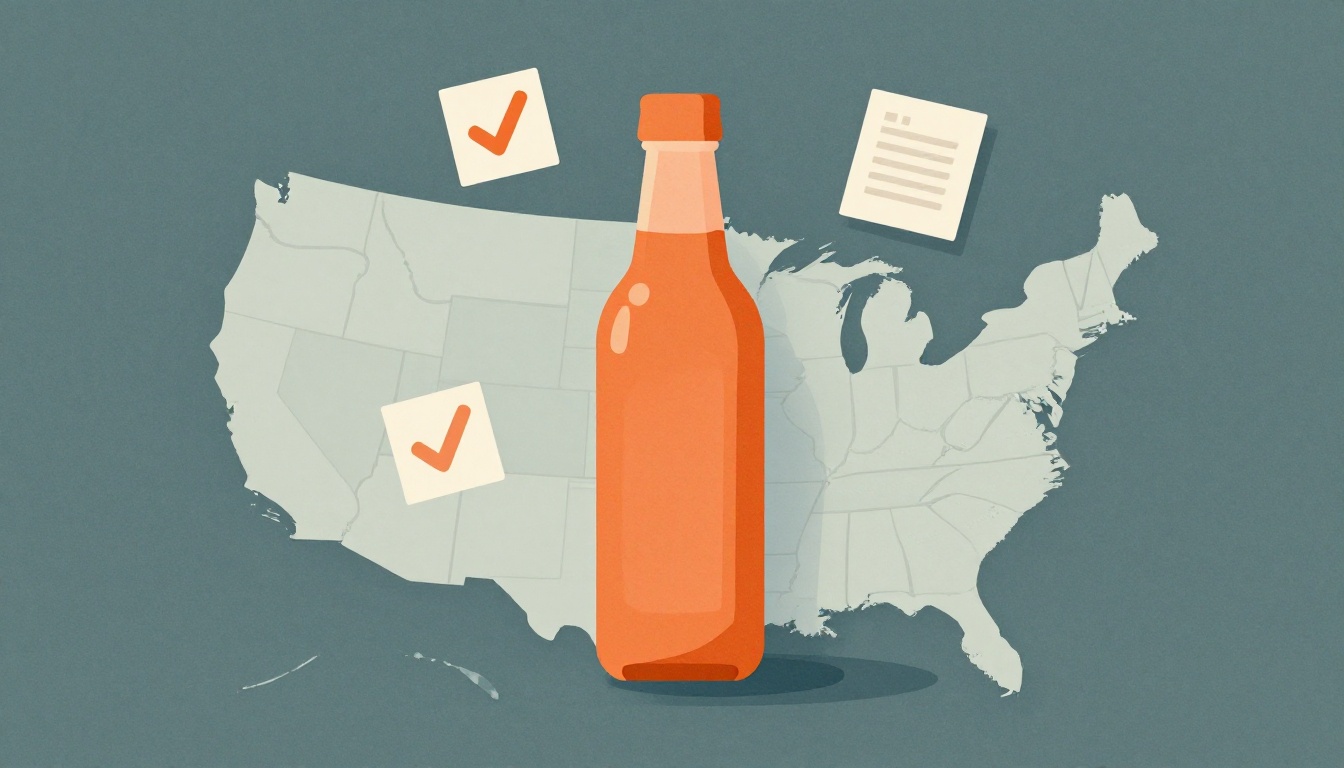
You've perfected your formula, secured a co-packer, and designed eye-catching packaging. But before you can sell a single can or bottle, you must navigate a patchwork of state-specific beverage laws that can make or break your launch. Unlike federal rules from the FDA or TTB, which apply uniformly, each state has its own licensing, labeling, and distribution requirements. Overlooking one can delay your launch by months or result in fines. This checklist helps you identify and manage the state-level compliance issues that matter most for your beverage brand.
Which of the following is true about control states in the U.S.?
Select one answer.
Understand Your Product's Regulatory Category
First, determine whether your beverage is alcoholic or non-alcoholic, as this dictates which agencies regulate you. For alcoholic beverages, the federal Alcohol and Tobacco Tax and Trade Bureau (TTB) requires producers to obtain permits and label approval (COLA) before marketing. However, states also have their own alcohol control boards that issue licenses and enforce local laws. For non-alcoholic beverages, the FDA regulates labeling and safety, but states may still require food handling or manufacturing permits. As noted in a guide from Power Brands, in the U.S., you generally need a basic business license plus any relevant food handling or manufacturing permits, and you should check with your state's health department for specifics.
Research Your State's Alcohol Control Model
If your product contains alcohol, know whether your target state operates under a "control" or "license" model. According to the National Alcohol Beverage Control Association, seventeen states and jurisdictions, including Alaska, Maryland, Minnesota, and South Dakota, have adopted forms of the control model, where government agencies control the sale of distilled spirits and sometimes wine and beer at the wholesale level. Thirteen of those jurisdictions also control retail sales for off-premises consumption. This means you may need to sell through state-run stores or designated agents, which affects your distribution strategy. For example, Delaware currently prohibits direct-to-consumer wine shipping, but plans to launch a wine direct ship license program in fall 2026, as noted by the Delaware Office of Alcoholic Beverage Control Commissioner.
Secure the Right Licenses and Permits
Each state has specific licenses for different types of businesses and activities. For instance, Missouri's Division of Alcohol and Tobacco Control offers separate licenses for beer by the drink, beer and light wine by the drink, and retail by the drink (spirits, wine, and beer), each with different fees and operating hours. If you plan to sell alcohol to-go, check state-specific rules. In Texas, alcohol-to-go is permanent law, but mixed drinks containing distilled spirits must be in tamper-proof containers sealed by the retailer with a label that includes the retailer's business name and the words "alcoholic beverage." In Iowa, only certain license holders can sell cocktails to-go, and employees must be 18 or older to fill and sell them. Always verify the exact requirements with the state's alcohol control board.
Comply with Labeling and Packaging Rules
Beyond federal labeling requirements, states may impose additional rules. For example, California requires Prop 65 warnings on products that contain listed chemicals. Some states have specific container requirements for alcohol-to-go. In Iowa, containers for to-go cocktails must be sealable and cannot be paper or Styrofoam cups or single-use plastic cups. Delaware prohibits making, storing, or serving infusions or batched alcoholic beverages in empty liquor bottles that once contained alcoholic liquor. Review your packaging against both federal and state rules to avoid costly redesigns.
Plan for Distribution and Direct Shipping
Distribution laws vary significantly. In control states, you may need to work with state wholesalers. In license states, you may have more flexibility but still need to comply with franchise laws that govern distributor relationships. If you plan to sell online and ship directly to consumers, check each state's direct shipping laws. For example, Delaware currently prohibits direct-to-consumer wine shipping, but that will change in fall 2026. Some states allow out-of-state wineries to apply for a Direct Shipper license, but the rules differ for beer and spirits. Always confirm whether your product can be shipped to a consumer's home in each state you target.
Create a State Compliance Checklist
To stay organized, build a checklist for each state you plan to enter:
- Identify your product's regulatory category (alcoholic vs. non-alcoholic).
- Determine if the state is a control or license state.
- List all required licenses and permits (e.g., manufacturer, wholesaler, retailer, direct shipper).
- Verify labeling requirements, including any state-specific warnings.
- Check packaging rules for to-go or delivery sales.
- Understand distribution restrictions and franchise laws.
- Review direct-to-consumer shipping allowances.
- Confirm age verification and employee training requirements.
- Keep copies of all applications and approvals for your records.
By systematically addressing these areas, you can avoid common pitfalls and launch with confidence. Remember, state laws can change, so always verify with official state agencies or consult a compliance expert.
How the Featured Expert Can Help
Navigating state-specific beverage laws is complex, but you don't have to do it alone. Pete Grego Consulting provides brand strategy, go-to-market, production, and compliance services to help businesses launch and grow sustainably. Their expertise includes aligning co-packers and navigating regulatory requirements, including TTB and FDA standards. Visit their website to book a consultation and get the guidance you need for a successful launch.
Quiz
Which of the following is true about control states in the U.S.?
- They control the sale of distilled spirits and sometimes wine and beer through government agencies at the wholesale level.
- They allow unlimited direct-to-consumer shipping of all alcoholic beverages.
- They have no licensing requirements for alcohol sales.
Correct answer: The first option.